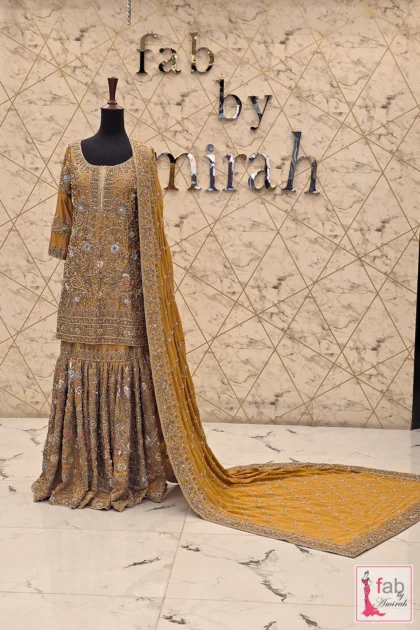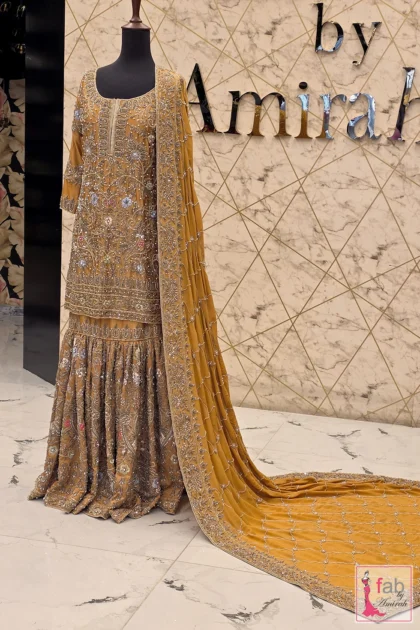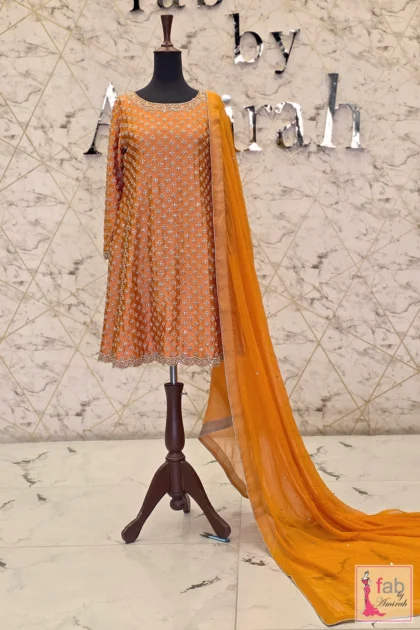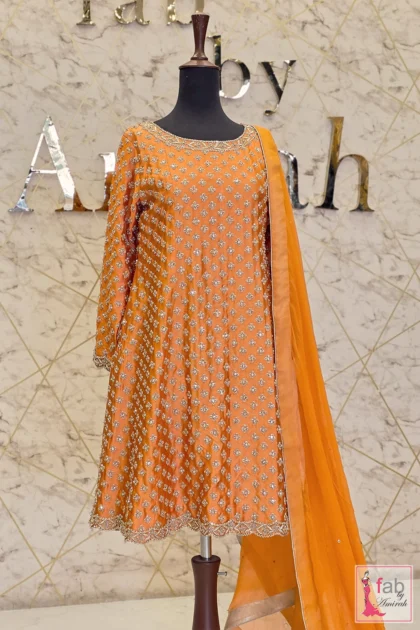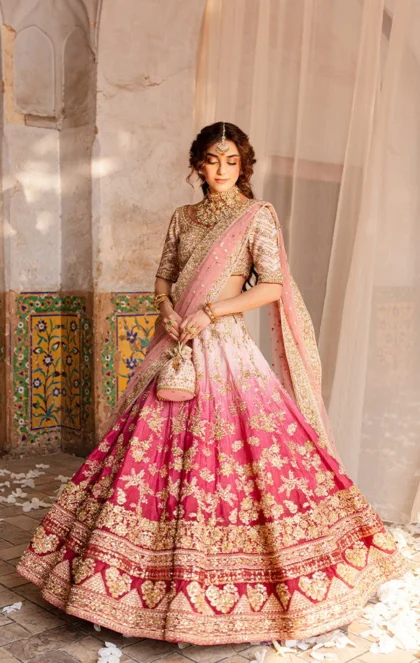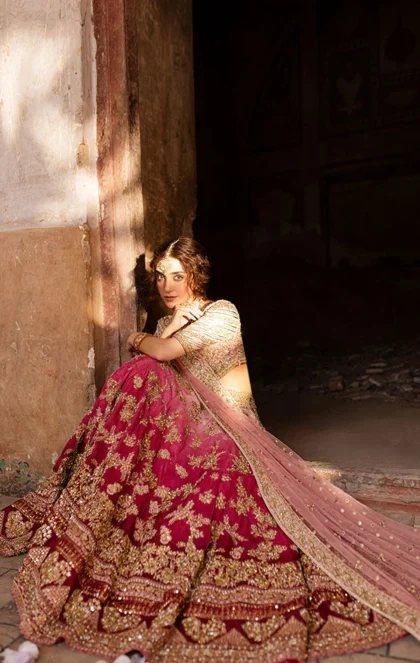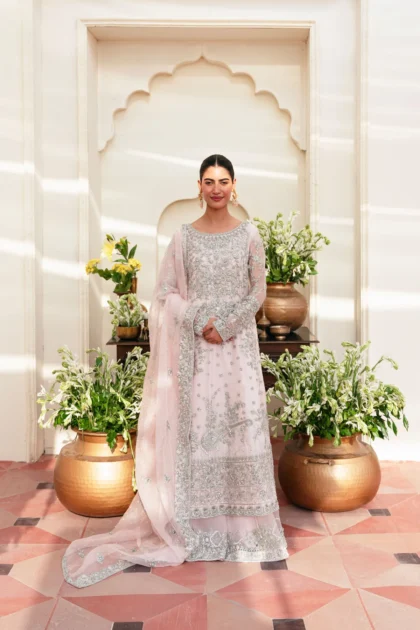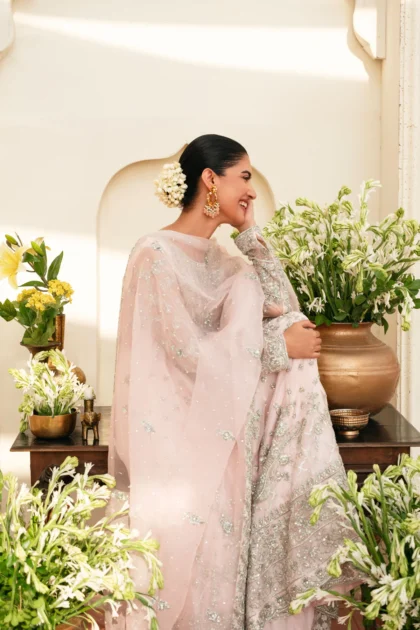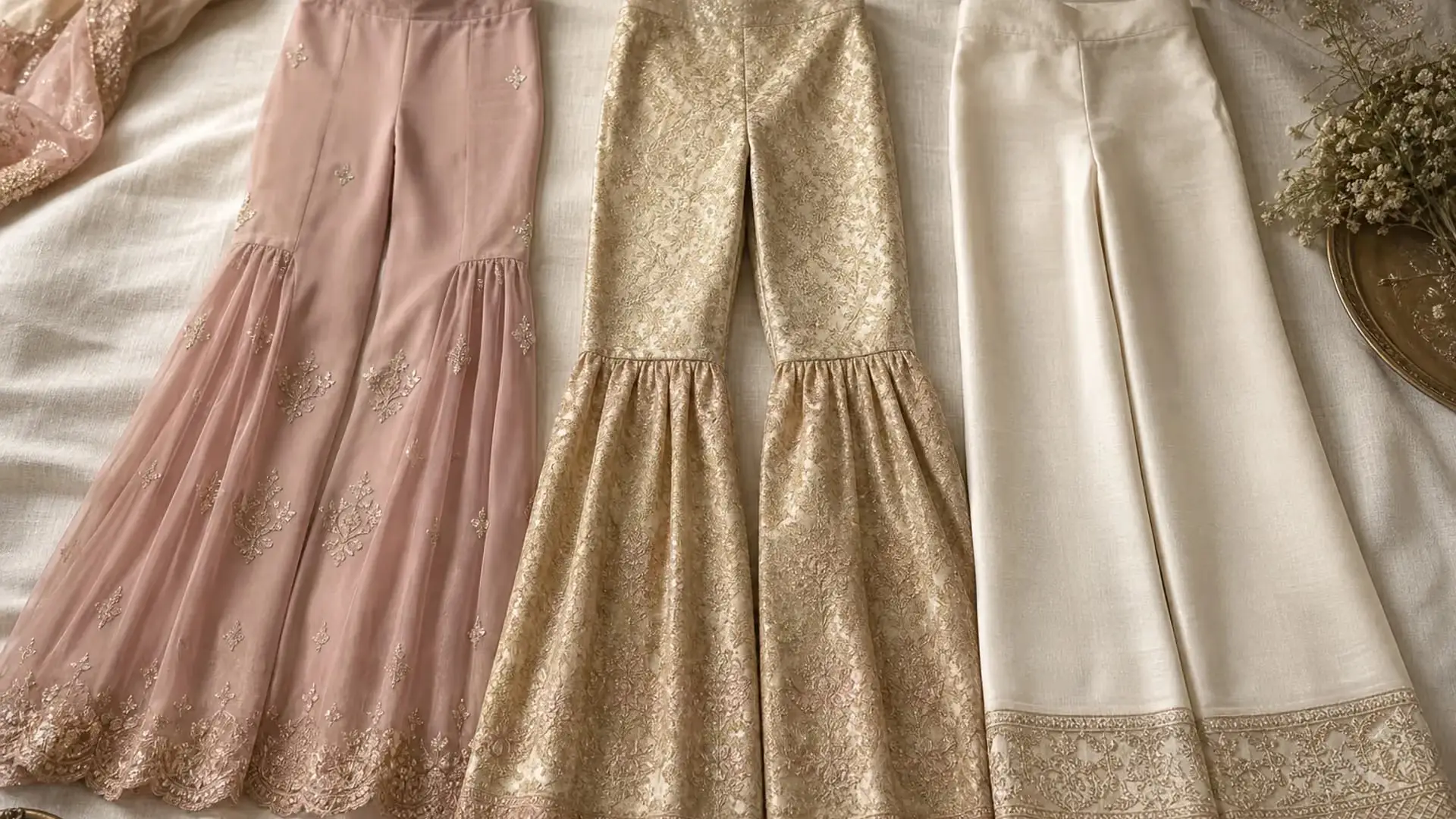
The concept of the “Second Look” has quietly redefined modern South Asian wedding fashion. While the main ceremony demands traditional weight and structured grandeur, post-ceremony receptions, after-parties, and Sangeets call for movement, dance, and effortless charm. Designing modern gharara and sharara outfits offers the ultimate secret weapon for brides and festive guests seeking that exact transition. Choosing modern gharara and sharara outfits allows you to stay culturally rooted while embracing contemporary ease.
Understanding the Heritage: Gharara vs. Sharara
Before transforming these classic silhouettes into contemporary statement pieces, it helps to understand their structural differences rooted in royal Awadh court fashion history:
- The Gharara: Fitted tightly at the thighs and gathered dramatically at the knee with a decorative joiner band (gota), the Gharara creates a distinct, flared trumpet silhouette that highlights movement.
- The Sharara: Flowing continuously from the waist down like wide-legged palazzo trousers, the Sharara offers an uninterrupted, fluid drape that mimics the volume of a lehenga with the ease of pants.
Re-imagining modern gharara and sharara outfits allows you to preserve this royal heritage while tailoring the cuts for modern comfort.
Why Modern Gharara and Sharara Outfits Lead the Second Look Trend
As highlighted across Vogue India’s wedding reception reports, today’s brides are moving away from spending an entire evening constrained by heavy ceremonial lehengas. Styling modern gharara and sharara outfits gives you distinct advantages:
- Unmatched Mobility: Whether you are stepping onto the Sangeet dance floor or mingling at an after-party, wearing modern gharara and sharara outfits keeps your hands free and legs unrestricted.
- Sculpted Proportions: Pairing wide-flared bottoms with shorter tops creates an elongating visual line, making you look taller in photographs.
- Versatile Restyling: Unlike single-use bridal lehengas, individual panels of modern gharara and sharara outfits can easily be re-worn across future festive functions.
4 Ways to Modernize Gharara and Sharara Outfits
Transforming traditional court attire into contemporary showstoppers comes down to experimenting with hem lengths, blouses, and fabric layers when customizing modern gharara and sharara outfits:
1. The Sheer Organza Cape & Bustier
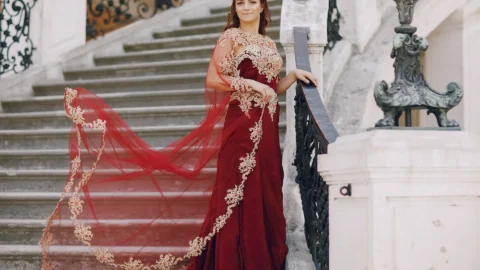
Swap out the traditional long kurti for a structured hand-embroidered bustier paired with a floor-length organza cape. This maintains regal coverage over your back while exposing sharp tailored lines at the waist.
2. The Cropped Biker-Style Blazer
For brides seeking a bold fusion edge, pairing a velvet or raw silk Gharara with a tailored, cropped blazer jacket creates a high-fashion, editorial aesthetic that stands out instantly.
3. Asymmetrical & Short Kurti Hemlines
High-low hemlines and short flared kurtis ending well above the knee showcase the intricate gota work of a Gharara knee joiner without obscuring its craftsmanship.
4. Intricate Handwork on Light Bases
Balancing heavy zardozi hand embroidery craftsmanship on lightweight tissue silk or net bases gives you the richness of traditional attire without physical drag.
Styling Guide: Ceremony vs. Second Look
| Design Element | Traditional Ceremony Style | Modern Second Look |
| Top Silhouette | Knee-length straight kurti with full sleeves | Crop bustier, asymmetric jacket, or sheer cape |
| Fabric Base | Heavy velvet, dense brocade, or raw silk | Lightweight organza, tissue silk, or fluid georgette |
| Dupatta Drape | Heavy double dupatta draped over head and shoulder | Single sheer belt-anchored drape or caped top |
| Embellishment Focus | Full-surface zardozi and dabka work | Focused accent borders and localized motifs |
When exploring our shararas and ghararas collection, look for versatile two-piece and three-piece sets that allow creative restyling.
Pro-Tips for the Perfect Second Look Fit
- Check the Knee Gota Placement: For Ghararas, ensure the gather line sits roughly two inches above your knee joint. If placed directly on or below the knee, it will restrict movement when walking or sitting.
- Heel-Height Tailoring: Tailor your trouser hemline while wearing your actual party heels to ensure the fabric skims half an inch off the floor rather than tripping your steps.
- Dupatta Belting: Secure fluid organza dupattas with an embellished waist belt to keep your hands completely free while dancing.
Frequently Asked Questions
Are modern gharara and sharara outfits suitable for brides on their main wedding day?
Yes! While traditionally favored for Mehndi and reception second-looks, heavily embellished crimson or gold Gharara sets are increasingly worn for main Nikah and Barat ceremonies.
How do I choose between a Gharara and a Sharara for my second look?
If you want structured volume with defined knee gathers, choose a Gharara. If you prefer fluid, continuous movement that resembles a skirt, opt for a Sharara.
Final Thoughts: Redefining Festive Elegance
Mastering the art of the second look comes down to honoring heritage while celebrating personal style. By incorporating modern gharara and sharara outfits into your wedding wardrobe, you enjoy the perfect balance of royal tradition, effortless movement, and unforgettable glamour. Selecting handcrafted modern gharara and sharara outfits ensures your festive wardrobe remains versatile and elegant for years to come.