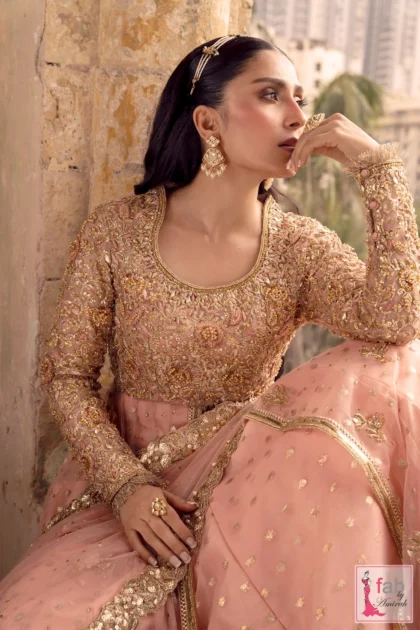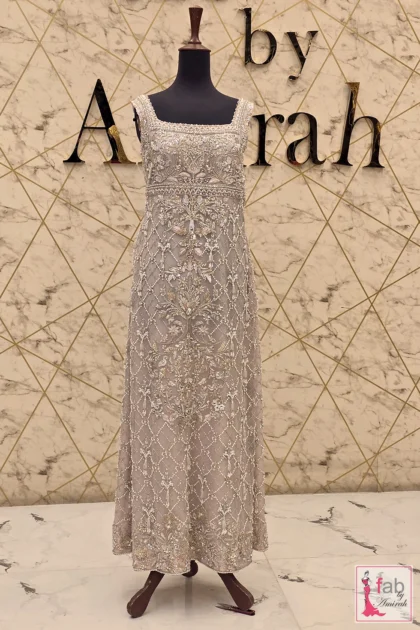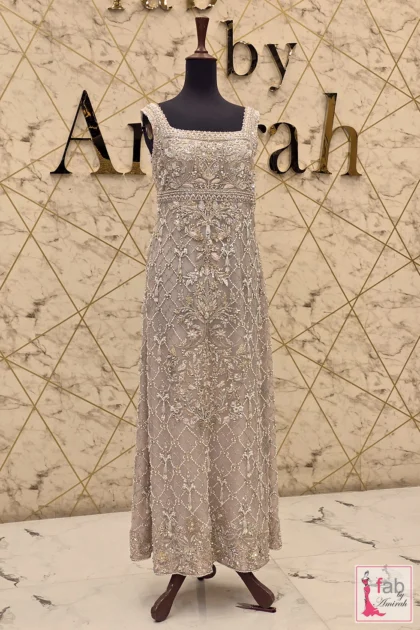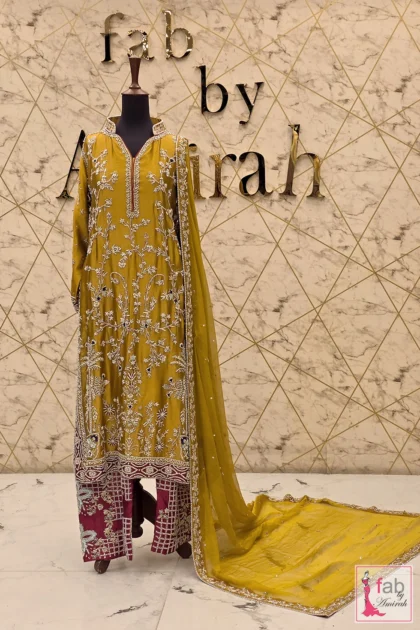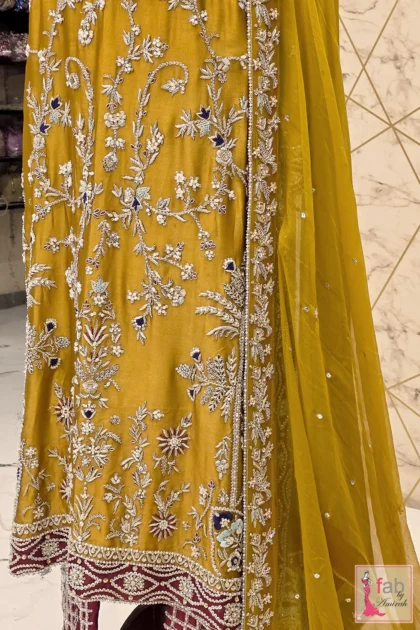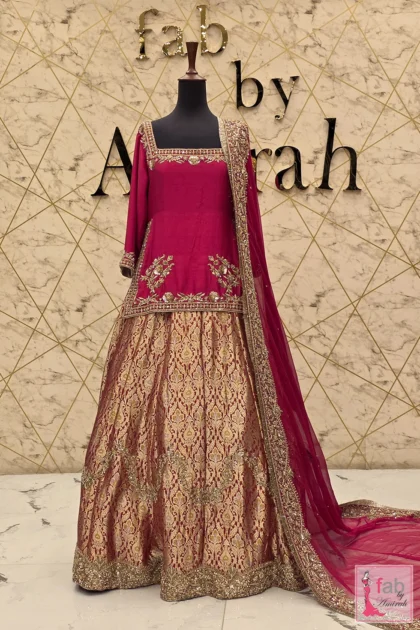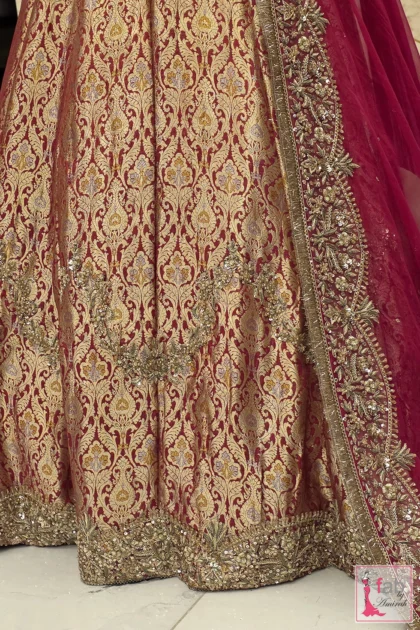
When a bride steps into her ensemble on her wedding day, she isn’t merely wearing silk and thread—she is stepping into a living legacy. Master craftsmanship in zardozi hand embroidery transforms pure raw silk into a work of art. Long before the lights catch the glimmer of bullion wire or dupattas are draped, there is a quiet, deliberate symphony unfolding inside our atelier.
At FAB BY AMIRAH, we believe true luxury is never rushed. Behind every intricate motif and sculptural silhouette lies a story of heritage, patience, and uncompromised technique. Today, we invite you behind the scenes to trace the journey of a bespoke piece adorned with zardozi hand embroidery: a process that spans over 120 hours of intricate artisanal work.
What is Zardozi? An Ancient Artistry Restored
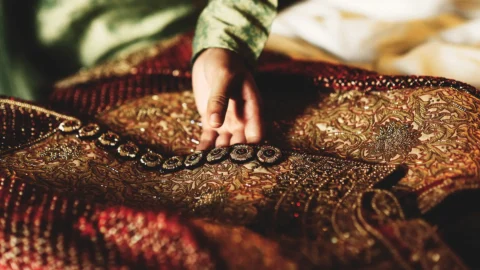
Derived from the Persian words zar (gold) and dozi (sewing or embroidery), traditional Zardozi metal needlework history reveals a centuries-old technique historically reserved for royal court attire. Unlike standard surface stitching, authentic zardozi hand embroidery is three-dimensional, heavy, and sculpted. Artisans work with solid metal threads, glass beads, sequins, and pearls, building layered textures directly onto rich fabrics like raw silk, velvet, and organza.
In an era dominated by high-speed machine production, our atelier remains dedicated to preserving authentic zardozi hand embroidery techniques passed down through generations of master artisans (karigars). As celebrated across Vogue India’s bridal couture reports, true heritage lies in hand-drawn motifs and hand-stitched wires.
Step-by-Step: From Raw Silk to Regal Heirloom
Creating an heirloom bridal dress featuring zardozi hand embroidery demands absolute precision at every stage. Here is how 120+ hours of hand-craftsmanship come to life:
[ Concept & Sketching ] ──► [ Pattern & Naqsha ] ──► [ Frame Mounting (Adda) ] │ [ Final Fitting & Quality ] ◄── [ Multi-Layered Zardozi Stitching ] ◄┘
1. The Design & Naqsha (15 Hours)
Every garment begins on paper. Our design team maps out custom floral trellis patterns, architectural arches, and traditional motifs suited to the bride’s individual silhouette. This paper design is transformed into a perforated stencil (naqsha), through which fine powder is rubbed onto stretched silk to transfer the layout.
2. Setting the Adda (5 Hours)
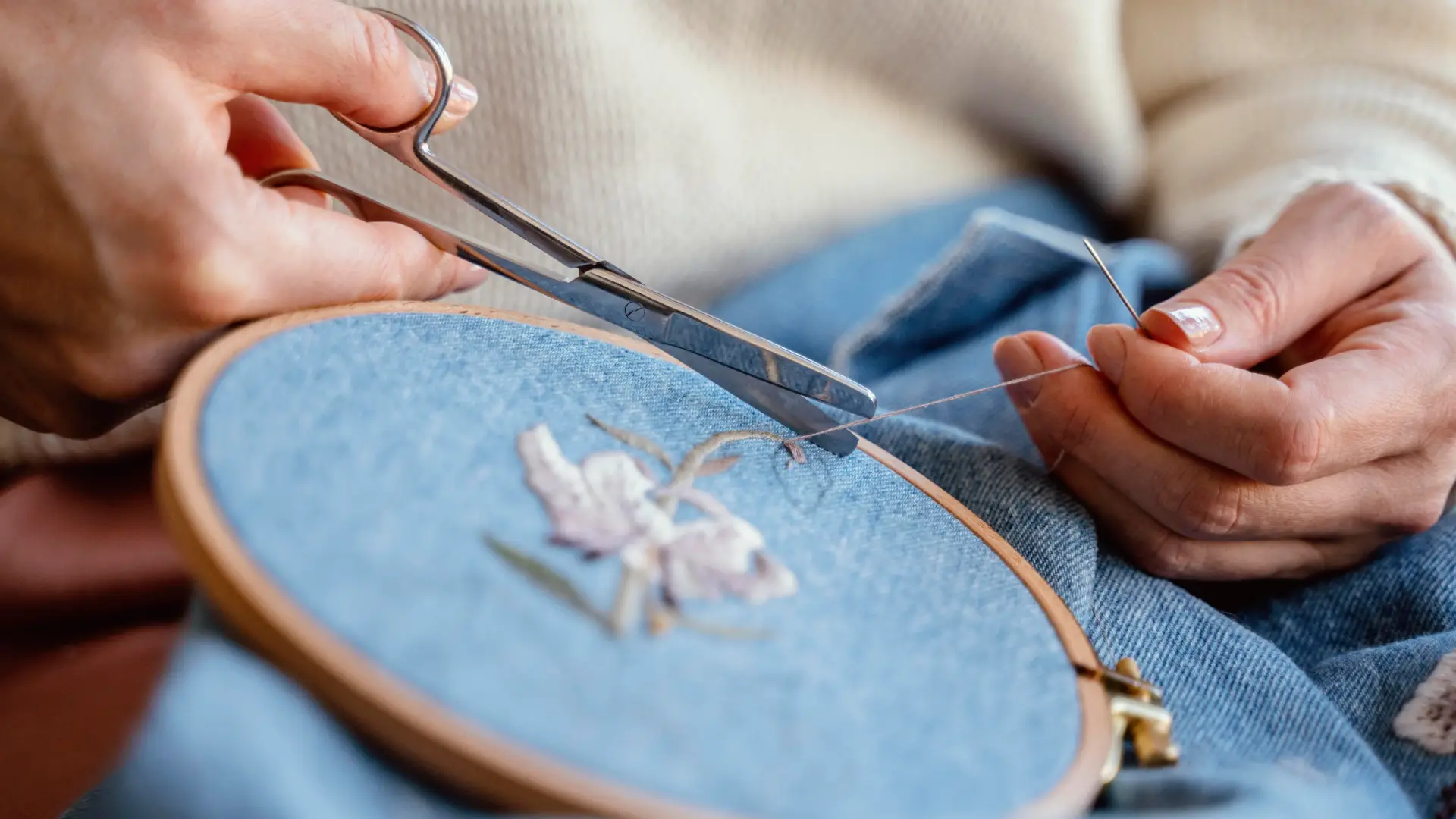
The fabric is stretched taut across a custom wooden embroidery frame, known as an adda. Achieving correct tension is critical—if the fabric is too loose, heavy zardozi hand embroidery will pucker; if too tight, the delicate silk threads may snap under weight.
3. Layered Hand-Embroidery (90+ Hours)
Using specialized, curved needles (aari) and delicate hand hooks, multiple artisans work simultaneously on a single panel:
- Dabka & Kora: Coiled metallic wires are sliced into tiny beads and hand-stitched to form dimensional flower petals and scrollwork.
- Naqshi: Twisted wire creates high-relief outlines, adding depth and shadow to your zardozi hand embroidery patterns.
- Mukesh & Sequin Accentuation: Flat metallic discs and faceted crystals catch natural light, adding subtle radiant shimmer without overwhelming the motif.
4. Tailoring, Fitting, & Finishing (10+ Hours)
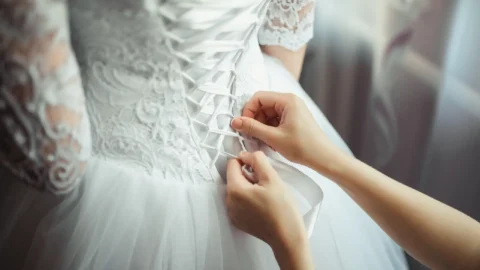
Once the embroidered panels pass rigorous quality inspections for weight distribution and thread stability, they are hand-tailored, lined with pure cotton-silk blends for breathability, and fitted to the bride’s exact measurements. If you are starting your bridal journey, explore our custom Barat and Nikah bridal collection.
How to Inspect Quality Zardozi Hand Embroidery
For brides investing in bespoke couture, knowing how to identify genuine zardozi hand embroidery is essential:
- Inspect the Reverse Side: Machine-made embroidery leaves dense, continuous plastic-like backing or uniform bobbin threads. Genuine zardozi hand embroidery shows individual knotting, neat stitching anchors, and minimal backing material.
- Test the Dimensional Weight: Authentic handwork has weight and structural integrity. Motifs crafted with zardozi hand embroidery should feel sculpted and tactile, not flat or paper-thin.
- Examine Bead & Wire Alignment: Machine work repeats identical patterns without variance. Artisanal zardozi hand embroidery features subtle, organic nuances in stitch angles that reflect light dynamically from every side.
For advice on balancing heavy handwork with your overall wardrobe, read our complete guide on choosing the perfect bridal lehenga.
Preserving Your Heirloom for Generations
A bespoke garment adorned with intricate zardozi hand embroidery is crafted to endure. To ensure your wedding dress remains pristine for future generations:
- Avoid Hangers: Heavy embroidered lehengas and gowns should never be hung on standard clothes hangers, as gravity will stretch shoulder seams and warp fabric over time.
- Wrap in Unbleached Muslin: Store your ensemble rolled or folded inside breathable, unbleached cotton or muslin sheets. Never store heavy metallic handwork in plastic garment bags, which trap moisture and oxidize metal wires.
- Professional Dry Clean Only: Always consult specialist couture cleaners who understand metallic wire care and hand-beaded textiles.
Experience Bespoke Bridal Artistry at FAB BY AMIRAH
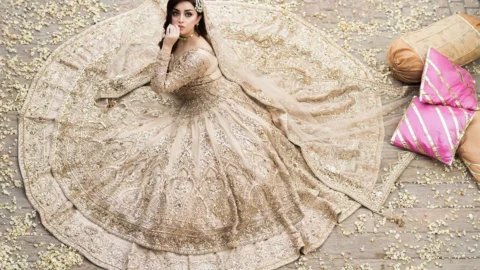
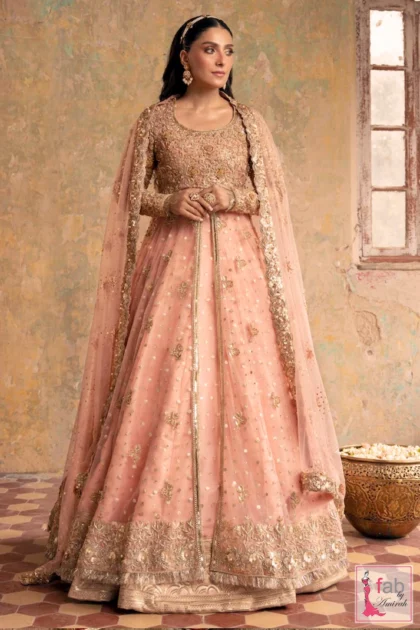
At FAB BY AMIRAH, every stitch of zardozi hand embroidery honors your unique story. Whether you are seeking a traditional crimson zardozi bridal outfit or a modern pastel ensemble, our atelier brings your dream wedding silhouette to life with uncompromised skill and care.
Ready to start your bridal journey? Contact us to book a one-on-one consultation today to view our craftsmanship in person and customize your dream ensemble.